Observation and Orientation Days
Getting to know the class 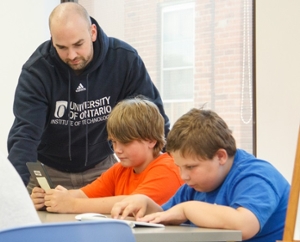
The Teacher Candidate can learn so much about establishing relationships with students, classroom management, and communication just by leading the class through general routines (e.g., entry/exit routines) or any other activity that is part of the daily classroom routine.
During this time, Teacher Candidates are learning to be a part of the classroom but are not expected to be submitting lesson plans nor teaching. They are still attending BEd program classes, and are expected to focus on assignments while building comfort and familiarity with your classroom.
Planning to host a Teacher Candidate:
- Talk to your students about the role of the Teacher candidate and prepare them for welcoming the TC into your classroom.
- Review the online Practicum Guide, found on the Ontario Tech University website under Frazer Faculty of Education, Undergraduate Programs.
- Establish what routines and procedures with which you will first familiarize your Teacher Candidate and for what you would like them to take responsibility.
- Provide a copy of the daily schedule, information about school routines, announcements, co-curricular activities, safety drills, etc.
- Ensure the Teacher Candidate has access to course materials, curriculum documents, and any relevant assessment and evaluation materials.
- Provide a list of any upcoming meetings and/or PD events in the school.
- Introduce the Teacher Candidate to your department or divisional team, the office and support staff, admin team, as well as federation representatives.
- Allow time for the Teacher Candidate to review your class list before the end of Observation and Orientation Week.
- Put plans in place for absences.
Teacher Candidates are to be supervised by a qualified member of the OCT at all times.
Appropriate routines for Observation and Orientation Days might include:
- School/classroom entry and dismissal procedures or routines.
- Attendance, late routines, and processes for ensuring absent students can access the work/lesson materials upon returning.
- Routines for responding to parent/guardian communications.
- Distributing/collecting forms or assignments.
- Communication routines with EAs, ECEs, and other support staff.
- Any routine that is specific to the class (e.g., washroom breaks, library, etc.)
- Technology routines.